In short: southern Angola, from Namibe Province to the Namibian border, is home to semi-nomadic herding peoples, often referred to as the "tribes" of southern Angola: the Mucubal (or Kuvale), the Himba and other communities. You can meet them with a guide who knows the communities, by following a few simple rules.
Southern Angola is home to pastoralist peoples whose lives revolve around their herds and traditions passed down from generation to generation. These communities, still rarely visited, are one of the great riches of the country. Here is who they are and how to meet them respectfully.
Herding peoples between desert and plateau
In Namibe Province and up to the Namibian border, communities live mostly from livestock herding, in an arid environment where water and pasture dictate movement. Each people has its own language, adornments and customs.
The Mucubal (Kuvale, Ovakuvale)
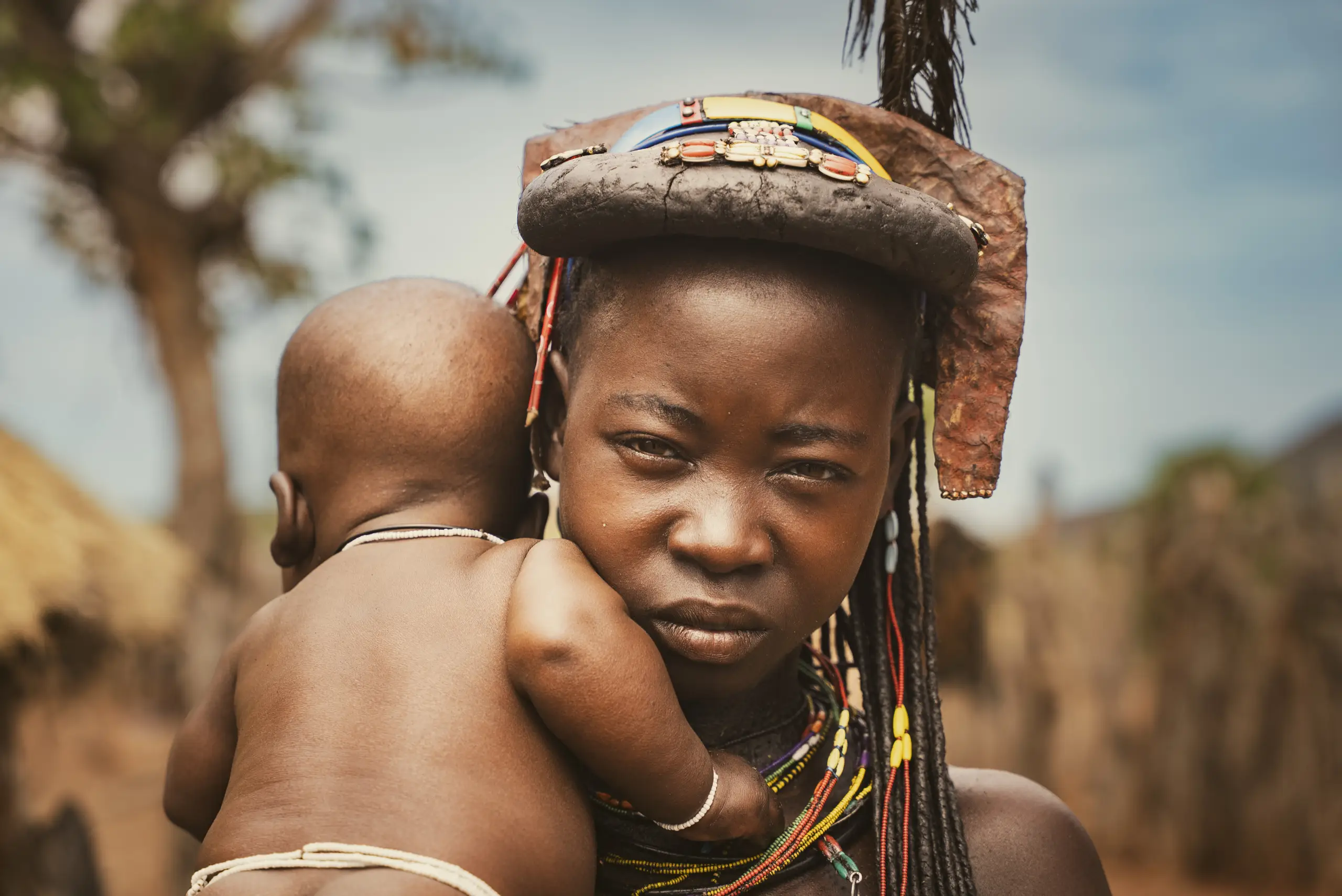
The Mucubal, also known as the Kuvale or Ovakuvale, are cattle herders of southwestern Angola, in Namibe Province. The herd is at the heart of their way of life. Their elaborate headdresses and adornments make them recognizable at first glance.
The Himba
The Himba are semi-nomadic, Herero-speaking pastoralists living between northwestern Namibia and southwestern Angola. They migrated along the Cunene River in the 16th and 17th centuries before settling in these regions. On the Angolan side, the communities living around Iona National Park are largely Himba. Well known on the Namibian side, they are far less visited on the Angolan side.
The Mucawana and other communities
On the road to Oncocua, you also come across other communities, including the Mucawana. The Southern Circuit was designed to meet the Himba, the Mucawana and the Mucubal in their own surroundings.
Meeting these peoples respectfully
These encounters are not a show. A few simple principles make all the difference:
- Travel with a guide who knows the communities. They introduce visitors, translate and ease the exchange.
- Ask before photographing a person, a child or a home, and accept a refusal.
- Take your time. A real encounter means staying, listening and sharing a moment, not rushing through.
- Stay discreet around herds, enclosures and private spaces.
- Let your guide organize exchanges (gifts, contributions) rather than handing things out on your own initiative.
Oncocua: meeting people in traditional villages
On our Southern Circuit, the encounters begin on day 6, with the transfer from the desert to Oncocua and first contacts with local communities. Day 7 is an immersive day in traditional villages, before heading back to Lubango. A French-speaking guide and a local guide accompany you to ease exchanges and help you understand the different ethnic groups you meet.
Before this stage, the circuit crosses another exceptional landscape: read our article on the Namibe Desert.
Discover our tours in Angola and request a quote