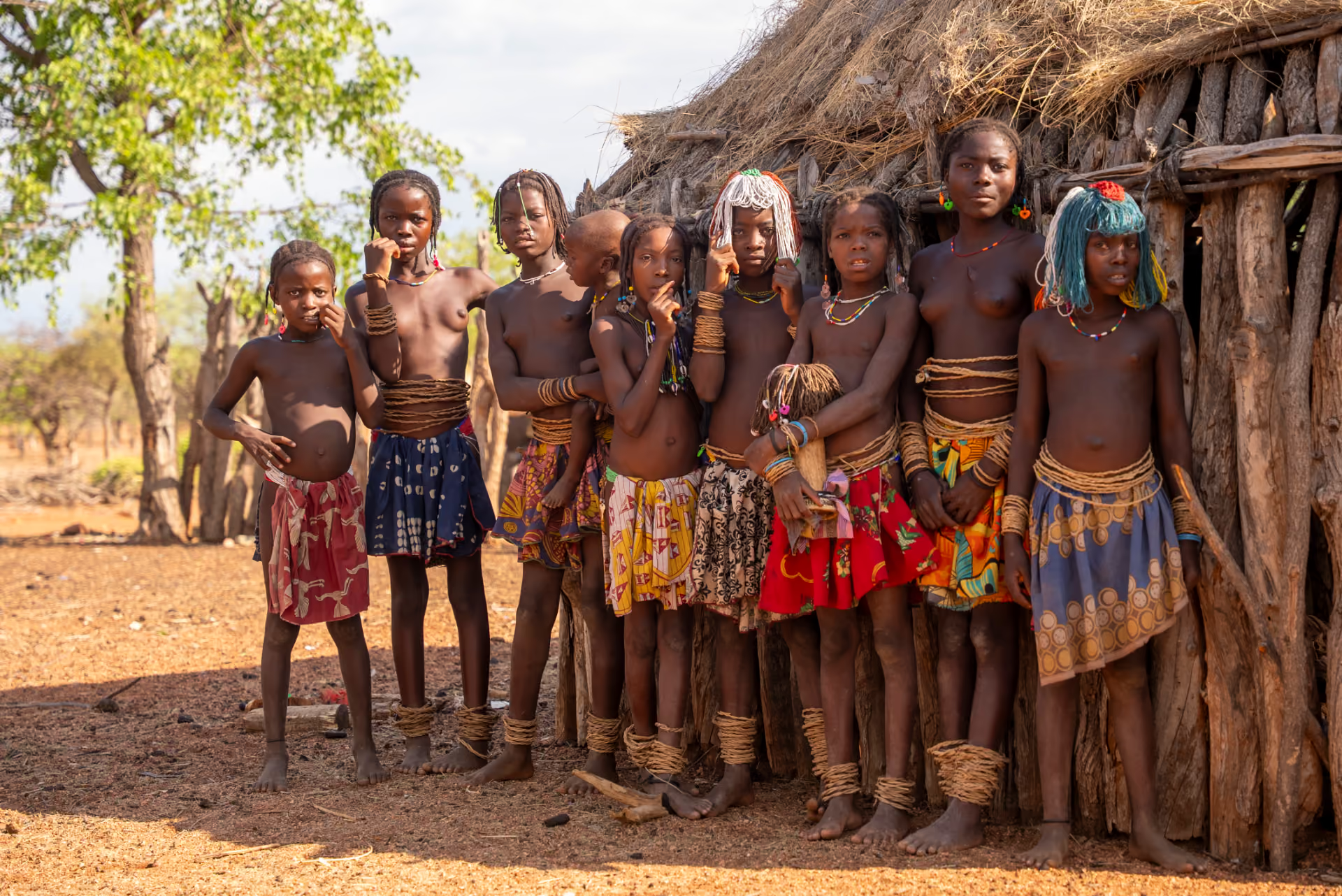
In short: Angola is a mosaic of mostly Bantu peoples. The three largest groups are the Ovimbundu, the Kimbundu and the Bakongo, but the country is home to many other communities, including the herding peoples of the south such as the Himba and the Mucubal. Portuguese is the official language, alongside many African languages.
Angola is often summed up by its landscapes. Yet it is the diversity of its peoples, languages and history that gives a trip its real depth. This guide gives you the key landmarks to understand the country before exploring it.
A mosaic of Bantu peoples
Most Angolans belong to Bantu peoples. According to the CIA World Factbook, the Ovimbundu make up about 37% of the population, the Kimbundu (or Ambundu) 25% and the Bakongo 13%. People of mixed descent account for about 2%, and nearly a quarter of the population belongs to other groups, such as the Lunda-Chokwe in the east, the Nyaneka-Nkumbi and the Ambo in the south, the Herero, and the San, descendants of the first Khoisan inhabitants.
Portuguese is the official and most widely spoken language. In the 2014 census, many Angolans also reported speaking an African language: Umbundu, Kikongo, Kimbundu, Chokwe or Nhaneca, among others.
The main cultural regions
- The northwest and Cabinda: lands of the Bakongo, heirs to the former Kingdom of Kongo.
- Luanda and its region: the historic heartland of the Kimbundu, around the capital.
- The central highlands: home of the Ovimbundu, the country's largest group.
- The east: the domain of the Lunda-Chokwe.
- The south and southwest: herding and agro-pastoral peoples, from the Nyaneka to the Himba and the Mucubal.
The herding peoples of the south
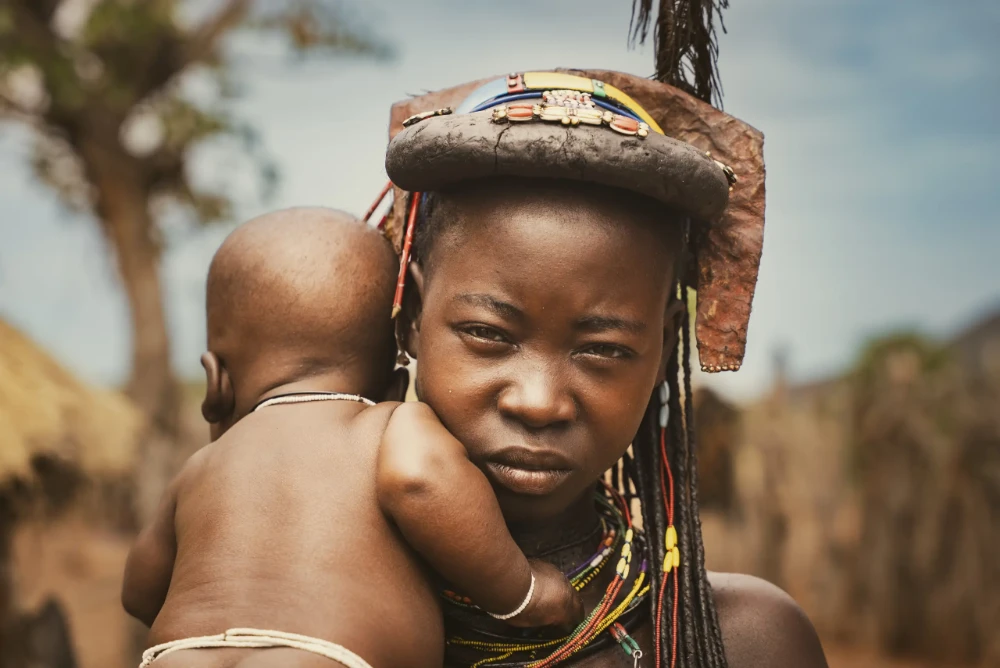
In Namibe Province and up to the Namibian border live peoples whose lives revolve around their herds. The Himba, semi-nomadic Herero-speaking herders, migrated along the Cunene River in the 16th and 17th centuries before settling between northwestern Namibia and southwestern Angola. The Mucubal, also known as the Kuvale or Ovakuvale, are cattle herders of Namibe Province, recognizable by their elaborate headdresses and adornments.
These communities remain rarely visited and deeply attached to their way of life. To learn more, read our article on the tribes and peoples of southern Angola.
From kingdoms to today's Angola
Long before Europeans arrived, the territory was organized into kingdoms. The Portuguese established relations with the Kingdom of Kongo in 1483. Further south lay the kingdoms of Ndongo and Matamba, then the Ovimbundu kingdoms. Queen Njinga, ruler of Ndongo and Matamba in the 17th century, remains the great figure of resistance to the Portuguese presence.
The Portuguese colony of Angola was founded in 1575. After nearly five centuries of Portuguese presence and a liberation war that began in 1961, the country became independent on 11 November 1975. A long civil war followed, which only ended in 2002.
A heritage to discover
- The rock paintings and engravings of Tchitundu-Hulu, in Namibe Province: about 2,000 engravings and 250 paintings, classified as historical and cultural heritage in 1996 and listed on UNESCO's Tentative List.
- The Pedras Negras de Pungo Andongo, in Malanje Province, where tradition places the footprints of Queen Njinga.
- The Fortaleza of Luanda, a fortress built in 1576 by Paulo Dias de Novais, the city's founder.
Meeting the peoples respectfully
An encounter needs preparation: travel with a guide who knows the communities, ask before taking photos, take your time and let the guide organize exchanges. These simple rules make for sincere moments, far from any staged visit.
Our 10-day Southern Circuit is designed for these encounters: after the Namibe Desert, it reaches Oncocua, where a full day is devoted to traditional villages, with a French-speaking guide and a local guide.