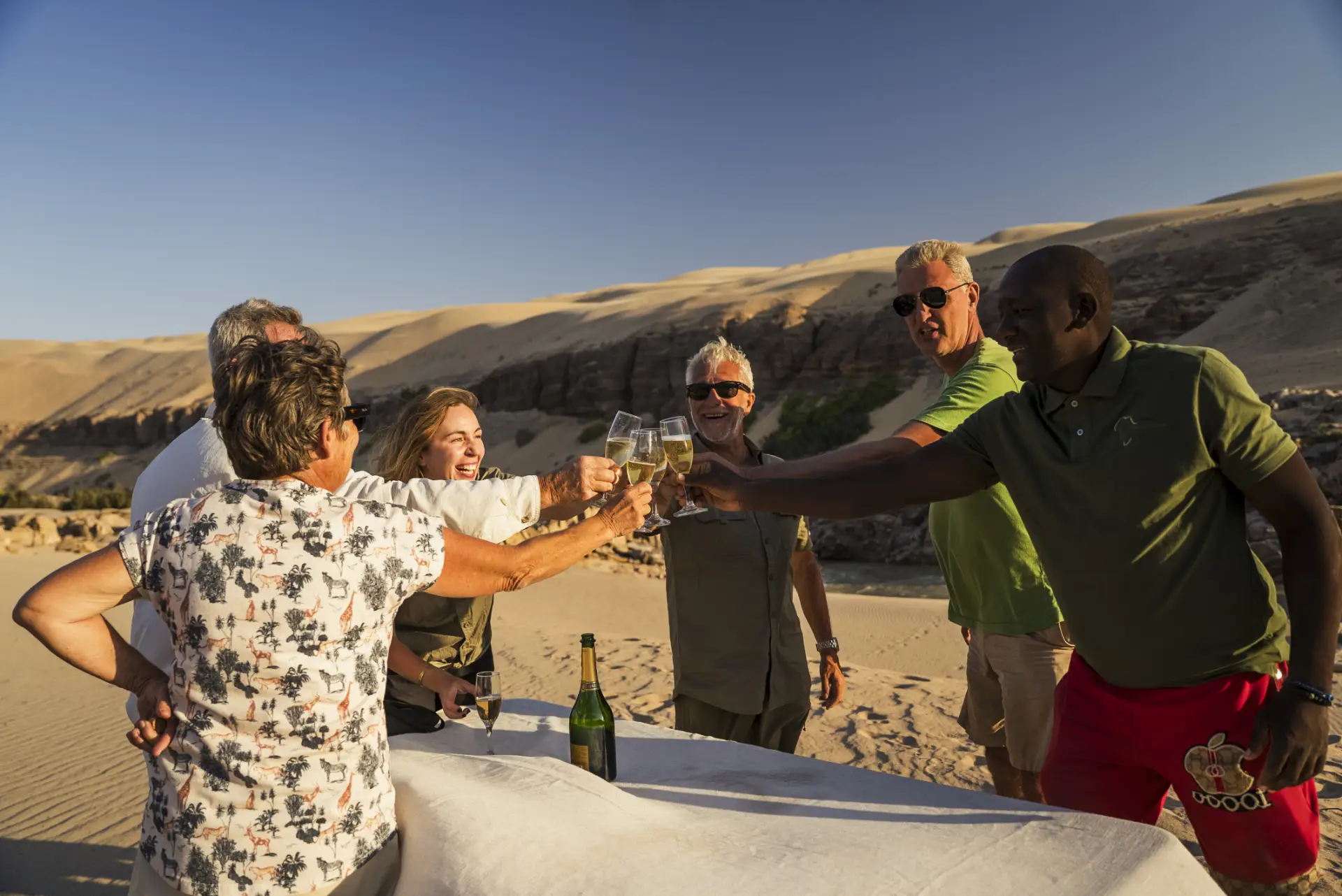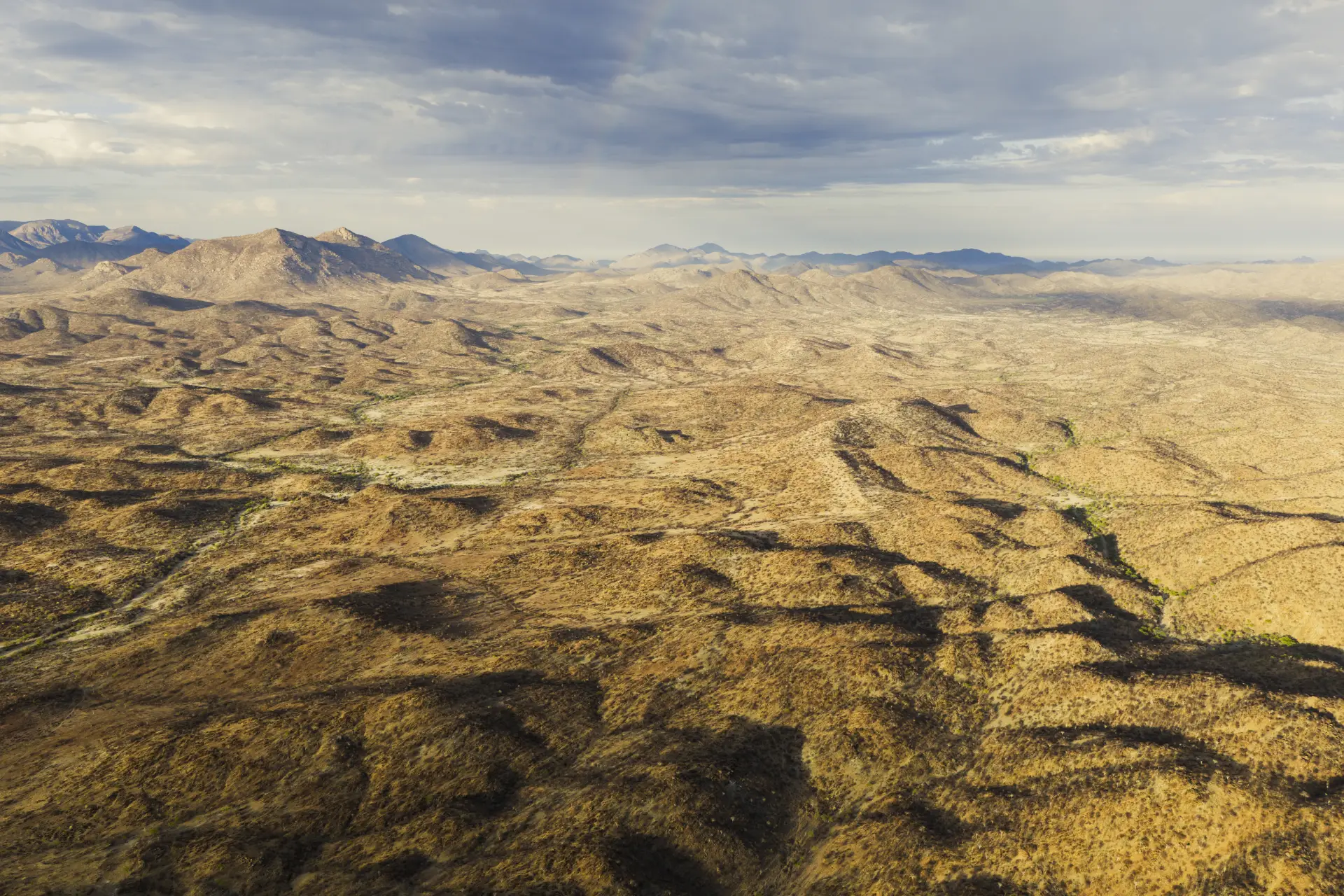
In short: the Namibe Desert is the Angolan part of the Namib, considered one of the oldest deserts in the world. It is best explored through Iona National Park, in the country's southwest, with a guide and suitable logistics: red dunes, a shipwreck-strewn coast, the mouth of the Cunene River and herding peoples.
In southwestern Angola, between the Atlantic Ocean and the foothills of the plateau, the Namibe Desert forms the northern tip of the Namib, estimated to be between 55 and 80 million years old. Very popular on the Namibian side, it remains almost untouched by tourism on the Angolan side.
A desert that meets the ocean
The Namibe Desert, also known as the Moçâmedes Desert, runs along the Angolan coast for about 450 km from the Namibian border. Cold Atlantic waters bring frequent fog and mild temperatures, while rain is almost non-existent along the coast. Heading inland, dunes and gravel plains give way to dry savanna, up to the escarpment that marks the start of the plateau.
Iona National Park, the heart of the desert
Iona is Angola's oldest protected area and one of its largest parks. Protected since 1937 and made a national park in 1964, it covers around 15,150 km² between the Curoca and Cunene rivers, with nearly 200 km of coastline. On the Angolan side it continues Namibia's Skeleton Coast park: together, these areas form one of the largest transfrontier conservation areas in Africa.
Since late 2019, the park has been managed by the conservation organisation African Parks under a long-term agreement with the Angolan authorities. Species that disappeared from the landscape during the years of conflict are gradually being reintroduced, such as the giraffe.
The landscape includes shifting dunes, calcrete plains, arid mountains, Baía dos Tigres and the mouth of the Cunene River.
What you'll see
- Dunes and mineral landscapes in Iona, where red sands contrast with the blue of the ocean.
- The Atlantic coast, wild and marked by old shipwrecks.
- The mouth of the Cunene, where the river meets the ocean in the middle of the desert.
- Welwitschia mirabilis, the emblematic plant of the Namib, dotting the roadsides of the park.
- Desert wildlife: oryx, zebras and ostriches. Iona is one of the few places in Angola where ostriches still live in the wild.
The peoples of the desert
Around the desert, in areas where a little water makes herding possible, live semi-nomadic pastoralist communities whose traditions have been passed down for generations. Around Iona National Park, they are largely Himba. To understand them better before you go, read our article on the peoples of southern Angola.
Visiting the Namibe Desert
The desert is not a place to visit alone: sand tracks, very few services, long distances and no water on the dunes. A guide who knows the terrain and logistics planned in advance are essential.
Bring layers (mornings can be cool and foggy), a hat, sunglasses, sun protection and a supply of water.
The desert on our Southern Circuit
Our 10-day Southern Circuit devotes three days to the desert: the crossing of Iona National Park (day 3), the drive to the mouth of the Cunene (day 4) and a full day among the dunes and mineral landscapes of the Namib (day 5). It starts in Lubango, crosses the Serra da Leba and reaches Moçâmedes, before continuing to Oncocua to meet local communities.
The expedition is run in bivouacs, allowing total immersion in the landscapes. A French-speaking guide and a local guide accompany you.
Discover our tours in Angola and request a quote