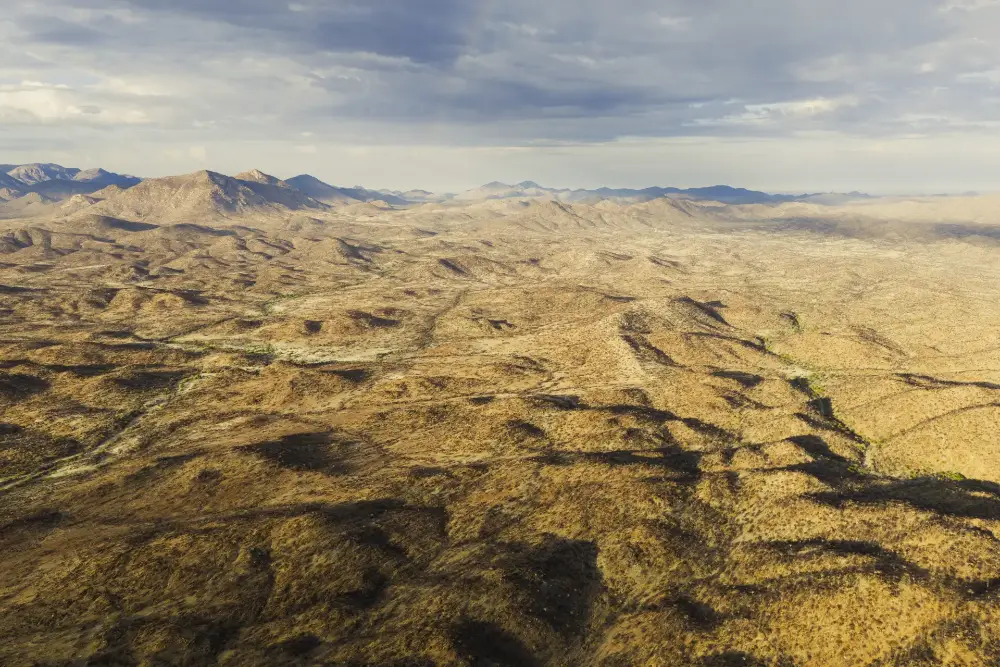
In short: Angola can be explored in three broad areas. Luanda and its coast, with Cabo Ledo and Quiçama National Park; the north, around Kalandula Falls; and the south, between the Serra da Leba, the Namibe Desert and the herding peoples. Our 10-day circuits each explore one region in depth.
Angola is a vast country that few travellers have visited, and its landscapes change dramatically from one region to another. To decide what to see, it helps to think in broad areas: Luanda and its coast, the north and its waterfalls, then the south, between plateau, desert and herding peoples. Here are the sights that matter, and how they fit into a trip.
Luanda and the Atlantic coast
The capital is where most trips begin. Among the sights is the Fortaleza, the fortress built in 1576 by Paulo Dias de Novais, the city's founder, to defend Luanda. South of the capital, the coast offers several memorable stops.
The Moon Viewpoint
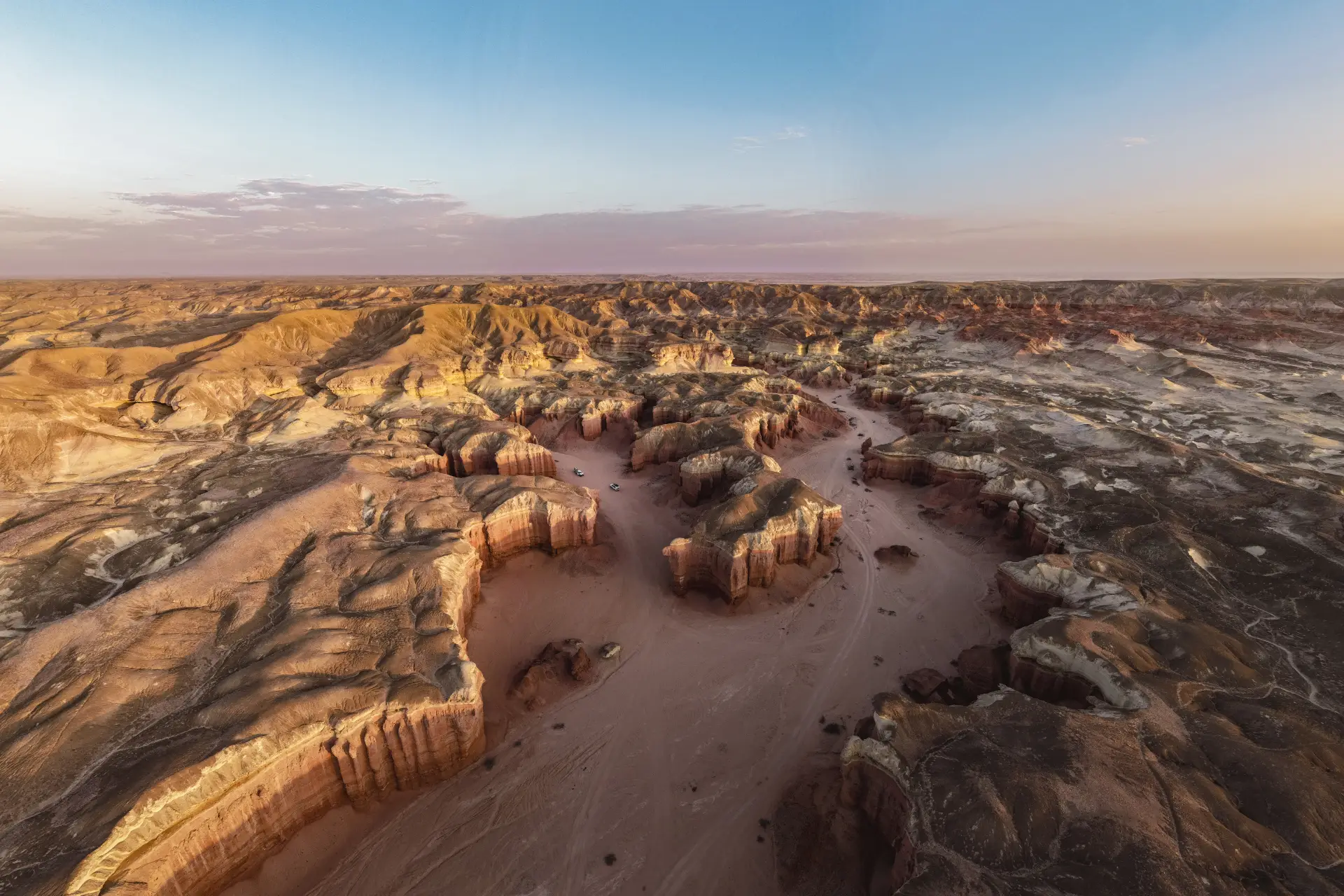
South of Luanda, the Miradouro da Lua ("Moon Viewpoint") looks out over a spectacular geological formation whose carved reliefs recall a lunar landscape.
Cabo Ledo
Further south, Cabo Ledo stretches out long golden beaches that have become a quiet surf spot. The place remains calm, although tourism is gradually developing there.
Quiçama National Park
About 70 km south of Luanda, Quiçama is a coastal savanna dotted with baobabs. Protected since 1938 and made a national park in 1957, it was hit hard by the war, then restocked through "Operation Noah's Ark", which brought elephants back from South Africa and Botswana from 2000. Wildlife remains discreet and sightings are never guaranteed, but the landscapes are well worth the trip. The Kwanza River runs along the park's northern edge, so a boat ride can be added.
The north: Kalandula and the Malanje region
About 400 km east of Luanda, in Malanje Province, Kalandula Falls (also spelled Calandula) are among the country's great sights. Formed by the Lucala River, they stretch about 400 m wide and drop about 105 m, ranking among the largest waterfalls in Africa by volume. They are traditionally regarded as a sacred place.
The region is also home to the Pedras Negras de Pungo Andongo, large dark monoliths rising above the savanna. According to tradition, the footprints of Queen Njinga are carved into the rock, and the site is said to have been the capital of the former Kingdom of Ndongo.
Our 10-day Northern Circuit combines forests, spectacular waterfalls, the Atlantic coast at Cabo Ledo, a safari in Quiçama and colonial heritage, with hand-picked lodges. It is a good first introduction to the country.
The south: Serra da Leba, desert and herding peoples
The Serra da Leba
Between the Lubango plateau and the coast, the hairpin road of the Serra da Leba is one of the country's most famous roads and one of its symbols. The descent towards the ocean is a highlight of any trip to the south.
The Namibe Desert and Iona National Park
In the southwest, the Namibe Desert forms the northern tip of the Namib, considered one of the oldest deserts in the world. Red dunes, a shipwreck-strewn coast and the mouth of the Cunene River make up a landscape almost untouched by tourism, protected by Iona National Park, the country's oldest protected area. To learn more before you go, read our article on the Namibe Desert.
The peoples of the south
Around the desert and up to the Namibian border live semi-nomadic herding peoples, including the Himba, the Mucubal and the Mucawana. Meeting them is one of the highlights of southern Angola, as long as it is done respectfully: see our article on the peoples of southern Angola.
Our 10-day Southern Circuit, run in bivouacs, links Lubango, the Serra da Leba, Iona National Park, the mouth of the Cunene, the Namib dunes and the lands of Oncocua. A French-speaking guide and a local guide accompany you.
How to choose your stops
- For a first discovery: the north, with its coast, waterfalls, Quiçama and colonial heritage.
- For the desert and meeting the peoples: the south, between the Serra da Leba, Namibe and Oncocua.
- To travel with peace of mind: the interior has few services and little infrastructure. Distances and logistics call for planning and local support.